
Strong & Soft
Counselling, Psychotherapy and Clinical Supervision in Peterborough (face-to face) & Online
About Me
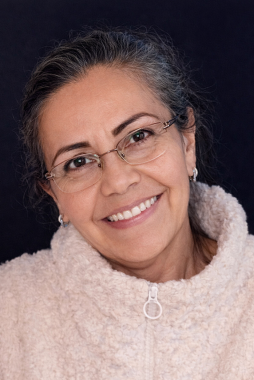
My name is Marlene Paulo and I am a highly qualified and dedicated professional with extensive experience in providing therapeutic support to diverse client populations. I am providing counselling and psychotherapy as well supervision for practitioners in counselling and psychotherapy.
My practice is backed by comprehensive insurance coverage, a clear Disclosure and Barring Service (DBS) check, and certification from The National Counselling Society (NCPS). In addition to my formal qualifications, I am committed to continuous professional development (CPD) and have completed specialised training in several key areas.
Specifically, my expertise lies in working with children and young adults (between 12 and 25 years old), using the pluralistic approach to address the clients uniqueness.
Furthermore, I am well-versed in trauma-focused therapy, having received specialised training in this area. My expertise also extends to providing compassionate support to individuals dealing with abuse and domestic violence, guiding them toward healing and empowerment.
I have a proven track record in assisting clients struggling with suicidal ideation, low self-esteem, and complex relationship dynamics, including couples and parental relationships.



SPEAK IN CONFIDENCE
Counselling takes place in a safe space, where you can meet with someone who will listen with sensitivity and empathy - and without judgement. In the therapy space thoughts and feelings can be expressed freely and in confidence.
A PROBLEM SHARED...
Trouble with a relationship; anxiety or panic attacks; mood swings or depression - many people face difficulties in their everyday lives that can be hard to get on top of. Counselling gives us a set of tools we can use to help gain a better understanding of what’s causing these problems - and how you can move towards managing or resolving them.
MAKE BETTER DECISIONS WITH THE CHOICES AVAILABLE NOW
Working together I can help you gain greater insight into the difficulties you are facing, help you to understand your actions and reactions into your moments of conflicts.
Contact Me
Feel free to contact me if you have any questions about how I work, or to arrange an appointment. This enables us to discuss the reasons you are thinking of coming to therapy, whether it could be helpful for you and whether I am the right person to help.
You can also leave a message on 07308 159718. I will make sure to reply in 5 workings days maximum.
MY LOCATION
I work face to face in Cambridgeshire and the surrounding areas.
In addition to face to face sessions, I also offer online sessions to people throughout the UK.
Frequently Asked Questions
What's the difference between counselling and psychotherapy?
Counselling is usually a good way to help with a current problem; something that can be discussed and - hopefully - resolved within a limited number of sessions. Over a certain number of weeks the understanding of the problem improves and away forward becomes clear. Psychotherapy often describes work that goes a bit deeper, towards more substantial life issues and problems having a deeper effect on the client’s life. Therapy often requires a long-term approach, so the number of sessions can be open-ended.
Which option is most suitable depends on the client and the difficulties they are facing. In some cases counselling works well as an ongoing, longer-term option - or psychotherapy can manage to resolve an issue in just a few sessions.
How long will I need to have counselling?
How long a period of counselling lasts will vary from person to person and depend on the depth of the issues they are facing. For some people a couple of sessions helps to bring their problems into focus, and they feel ready to move forward; other problems may require more of an open-ended approach.
Before we begin any work we will agree on the number of sessions we’ll undertake, and at the end of that number review our progress. As long as we both agree further therapy will be of benefit to you, sessions can continue.
How long will I have to wait for an appointment?
My aim is to offer a first appointment - known as an initial assessment - within 1-2 weeks. Then we would arrange a set number of counselling sessions to take place at the same time every week, that is convenient for you and where I have availabity. How quickly these sessions can begin will depend on the availabity of that free ‘slot’.
Will everything I say be kept confidential?
Everything that is said within the counselling room is private - this is one of the main ways counselling and therapy differ from talking to a friend or relative. Once you are comfortable with the format of weekly sessions and the safe space they provide, you will find the freedom to speak in confidence is of great value.
Note that there are some situations where you may be a risk to yourself or others, and there the law requires that I notify an authority; in these cases I may not be able to keep total confidentiality. Breaking confidentiality is very rare though, and only happens after the person concerned has been informed.
© Strong & Soft | Powered by WebHealer